iPaaS explained through how businesses use applications every day
What an iPaaS is in practice
An iPaaS, short for Integration Platform as a Service, is a platform that connects business applications so data can move automatically between them.
In practical terms, an iPaaS removes the need for people to move information manually from one application to another. Instead, applications exchange data on their own, based on rules defined by the business.
Most organisations rely on many business applications at the same time. Human resources uses one application, finance uses another, sales uses a third, and operations depend on several more. Each application does its job well, but very few are designed to work together without help.
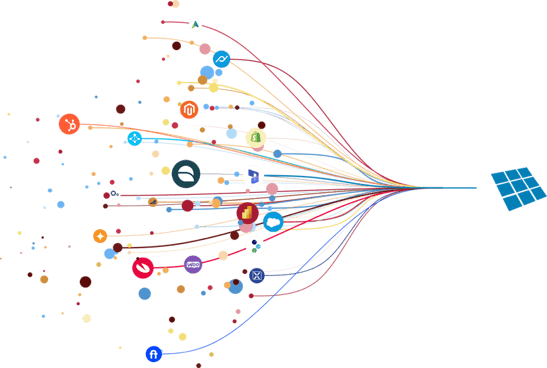
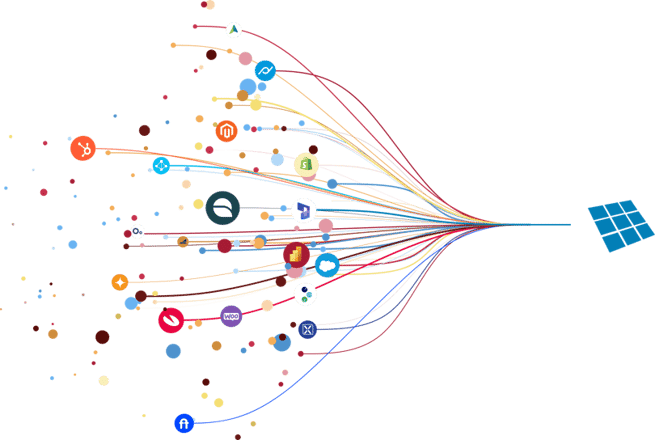
An iPaaS sits between these business applications and ensures that information flows where it should and when it should.
Why businesses feel the impact before they recognise the cause
Very few organisations begin by searching for an iPaaS. They usually begin with frustration.
Human resources teams struggle with reporting because employee data exists in several applications. Finance teams question numbers because invoices, orders, and payroll data come from different sources. Sales and marketing teams disagree about customer status because they work in separate applications. Leadership sees growing application costs without a corresponding improvement in efficiency.
From a leadership perspective, the organisation keeps investing in new applications, yet everyday work still feels slow and fragmented.
From an operational perspective, even simple tasks require too many steps across too many applications.
From a technical perspective, integrations exist, but they are fragile, poorly documented, or difficult to maintain.
These issues are not caused by poor applications. They are caused by applications that are not connected.
This is usually the moment when an iPaaS becomes relevant, even if the term itself is unfamiliar.
Why integration becomes a business concern, not just a technical one
As organisations grow, the number of business applications grows with them.
Each new application promises improvement, but each one also introduces a new requirement for data to move between tools. Without a structured approach, integration becomes reactive. Scripts are written, connectors are added, and manual work fills the gaps.
Over time, this creates risk.
Data becomes inconsistent. Processes depend on individuals rather than structure. When something stops working, it is difficult to see where the problem started or who is responsible. Changes become slower and more expensive.
At this stage, integration affects cost control, operational speed, and decision making. It is no longer only a technical detail.
This is where an iPaaS changes the conversation.
How an iPaaS changes the way organisations operate
An iPaaS provides a structured way to connect business applications. Instead of many one-off integrations, there is a single place where integrations are built, monitored, and maintained.
For operational teams, this means that data moves correctly between applications without manual effort. Reports become reliable, and everyday tasks involve fewer steps.
For technical teams, this means integrations follow clear logic, are documented, and can be adjusted without rebuilding everything from scratch. Issues can be identified and resolved before they affect the wider organisation.
For leadership, this means fewer overlapping applications, less hidden manual work, and lower long-term cost. Integration becomes a predictable and manageable part of running the business.
The value of an iPaaS lies in the stability and clarity it brings to how applications work together.
How ConnectMyApps approaches iPaaS
ConnectMyApps built its iPaaS, Canvas, around how organisations actually use their business applications.
Some teams want to design and manage integrations themselves. For these teams, Canvas provides a platform where integrations, logic, and data movement between applications can be controlled in detail.
Other organisations prefer not to own integration work internally. In these cases, ConnectMyApps provides managed services and takes responsibility for planning, building, testing, and maintaining integrations over time.
Both approaches rely on the same platform. The difference lies in who operates and maintains the integrations.
This flexibility matters because integration is not static. As business processes change, integrations must change with them.
Why an iPaaS is not about adding another application
At first glance, adding an iPaaS may seem like adding yet another application to an already complex setup.
In reality, an iPaaS often reduces complexity.
Instead of relying on multiple connectors, plugins, or point solutions, integrations are handled in one place. This makes it easier to understand how data flows between applications, easier to adjust processes, and easier to control cost.
The purpose of an iPaaS is not to introduce more technology. Its purpose is to make existing business applications work together.
When an iPaaS becomes essential
An iPaaS becomes essential when multiple teams rely on shared data, when manual work exists between applications, when reporting depends on several data sources, and when integrations are critical to daily operations.
At that point, integration is no longer optional infrastructure. It becomes part of the organisation’s core setup.
An iPaaS connects applications to business outcomes
For operational teams, an iPaaS removes friction from daily work. For technical teams, it provides control and reliability. For leadership, it protects investment and reduces waste.
An iPaaS is not simply an integration platform. It is a way to make business applications function as a whole rather than as isolated tools.
That is the role ConnectMyApps plays.